Homeowner guide · Comparison
Supply Vent vs Return Vent: What’s the Difference?
If you are replacing a cover, choosing a size, or trying to understand why one opening feels different from another, you need to know whether the opening supplies conditioned air or returns room air to the system. This guide explains the difference in practical terms, then connects it to measuring and SOKNOCKK’s real catalog.
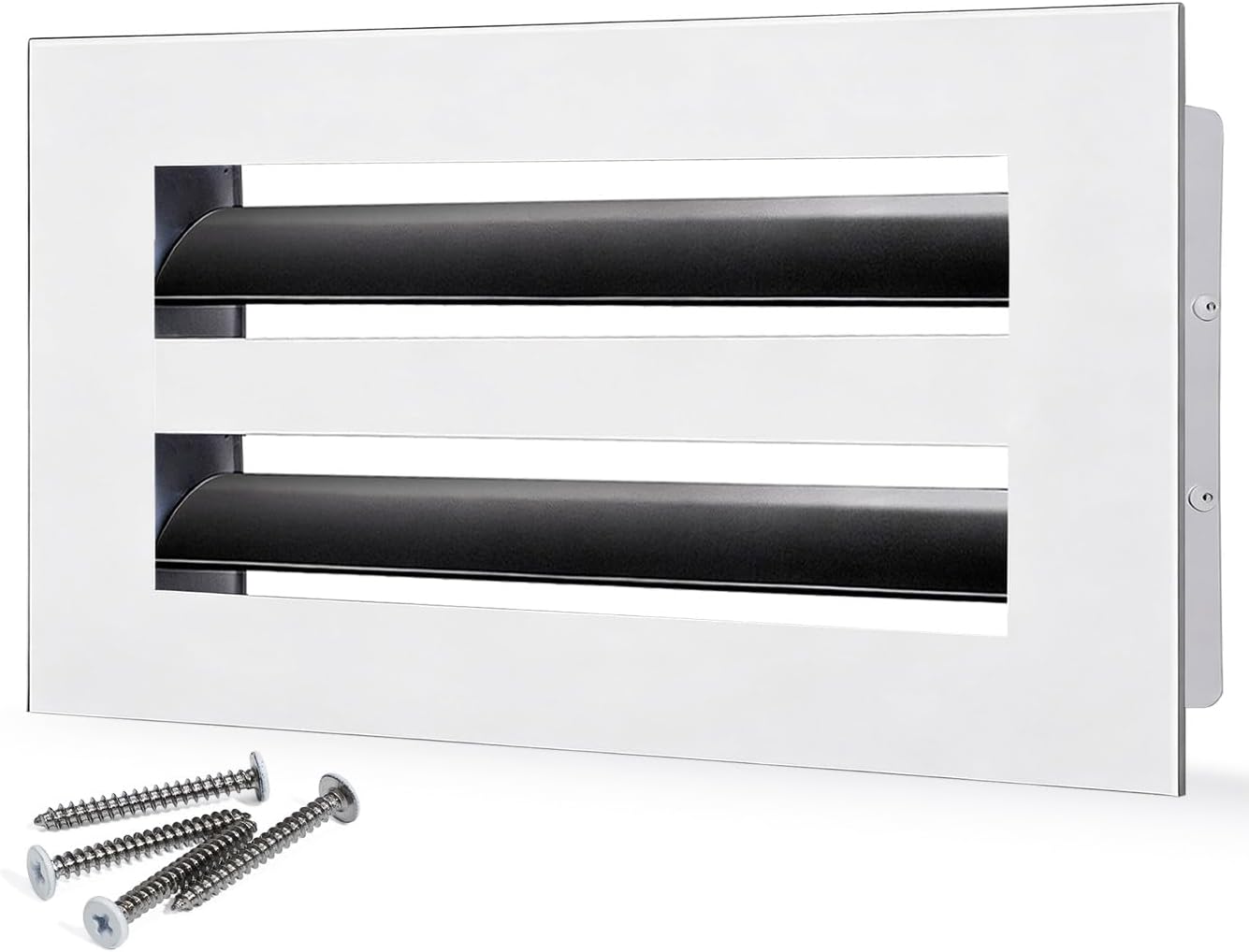
Quick Answer
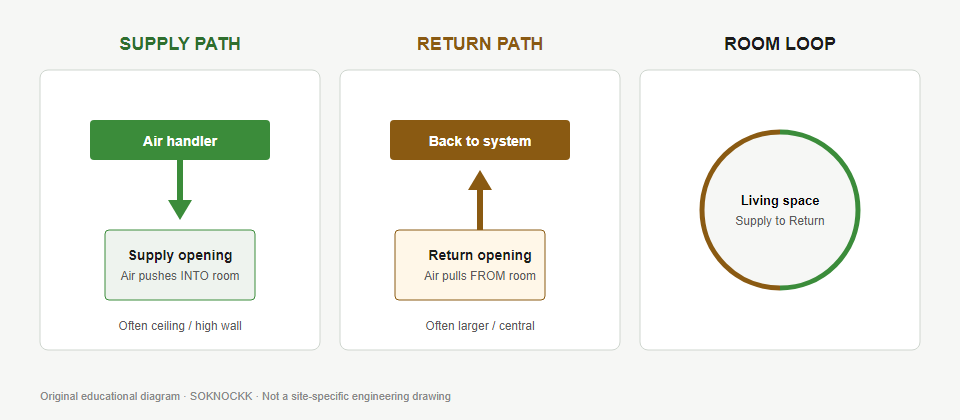
Supply vents push conditioned air into a room. Return openings pull room air back toward the air handler. With the system running, supply air is felt as outward flow; return air is felt as inward pull. Size still matters for both: an undersized face can restrict airflow. SOKNOCKK’s public catalog today focuses on decorative linear-style vent covers by opening size in White or Black — not a separate return-grille SKU list.
- Identify the opening by airflow direction first.
- Measure the duct/wall opening, not only the outer face.
- Shop Confirmed sizes on Vent Covers when a decorative cover is appropriate.
1. What a Supply Vent Actually Does
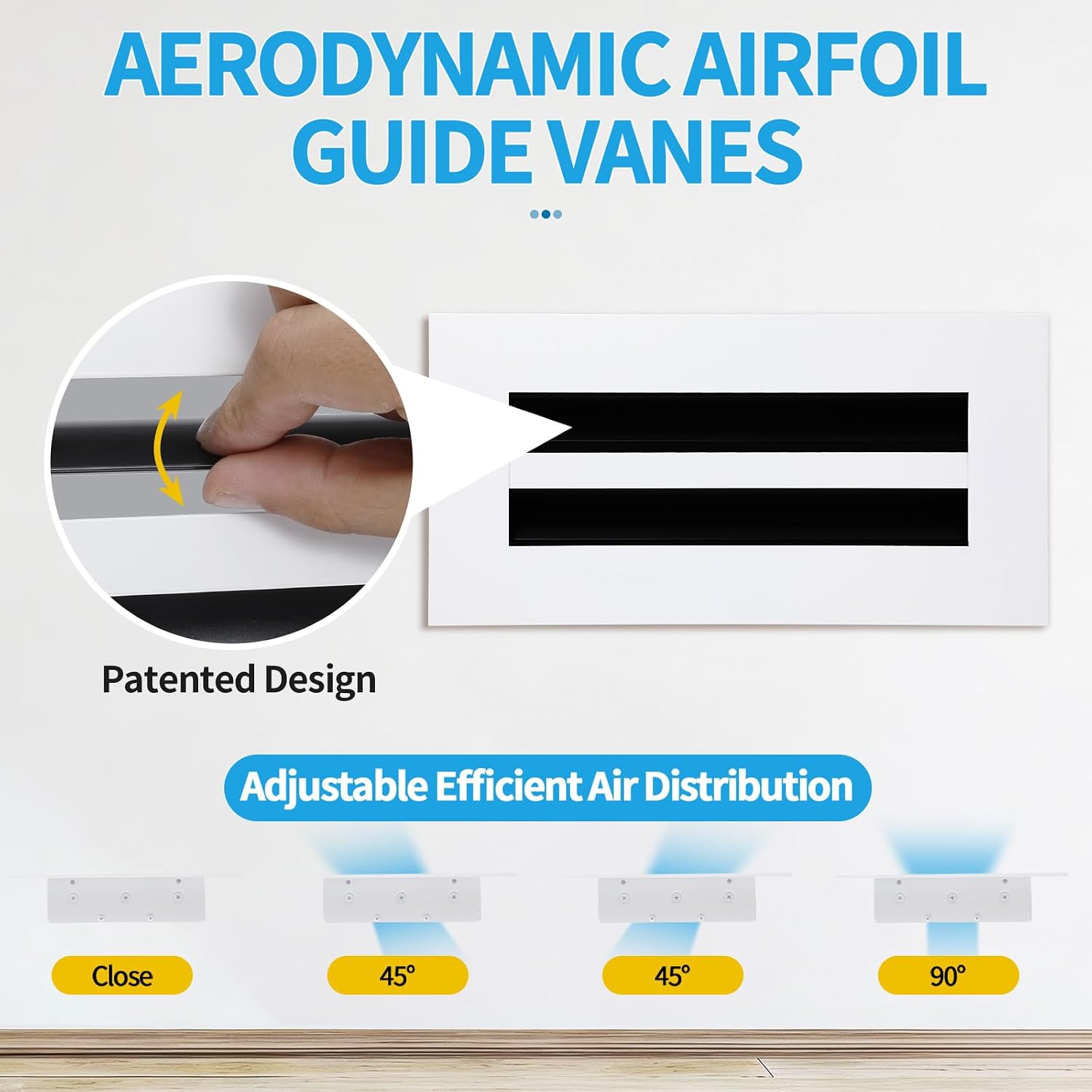
In a typical forced-air home, the air handler heats or cools air and the fan moves that air through supply ducts into living spaces. The visible end of that path is the supply opening — often covered by a register, grille, or decorative vent cover. When homeowners say “vent cover,” they are usually pointing at this finished face: the part that meets paint, wallpaper, or ceiling texture.
U.S. Department of Energy homeowner guidance describes ducts as the system that carries air from the furnace and central air conditioner to each room. Supply-side leakage or blocked registers can waste conditioned air and create comfort problems. That is why supply openings are not only a design detail: they are the last visible point in a delivery path. A cover that looks elegant but leaves the opening poorly matched can still create drafts, uneven room temperatures, or noisy airflow depending on the rest of the system.
From a shopper’s point of view, supply openings are also where finish decisions matter most. People notice color against white trim, black millwork, or modern ceilings. SOKNOCKK’s Confirmed catalog is built around that reality: opening size first, then White or Black finish, with product photography tied to verified Size+Color combinations.
Practical characteristics
- Air direction: outward into the room when the system runs.
- Role: deliver conditioned air to occupied space.
- Placement (typical): ceilings or higher wall locations in many homes — layouts vary.
- Cover job: finish the opening while allowing air to pass through the face.
Confirmed catalog items are decorative linear-style covers sold by opening size and White/Black finish. They are commonly used on supply openings homeowners are replacing for appearance and fit.
2. What a Return Vent Actually Does
Return openings are the intake side of the same loop. Room air travels back toward the air handler so it can be filtered and reconditioned. Building Science Education materials from DOE’s Building America ecosystem emphasize that ducted returns provide a path for room air to return to the central air handler and that dedicated return strategies help manage pressure balance between rooms.
Restriction on the return path matters. If return airflow is inadequate, system performance and comfort can suffer. Homeowner-facing Building America HVAC guidance notes that lack of adequate return airflow is a common duct-system problem. That does not mean every large grille is automatically a return — it means return free area and duct continuity deserve respect.
Home layouts vary widely. Some houses use one large central return. Others combine central returns with transfer grilles, jump ducts, or undercut doors so air can leave closed rooms. Those strategies are part of why “just put any cover on it” is risky language for returns. The cover is only one component in a pressure and airflow story.
For SOKNOCKK shoppers, the practical takeaway is simpler: identify whether you are covering a return path, measure carefully, and do not invent inventory that the public catalog does not list. If you need a decorative face over a measured opening that happens to be on the return side, evaluate free-area risk honestly and ask for help when unsure.
What homeowners usually notice
- Inward airflow at the opening when the system runs.
- Often a larger opening or a more central location (hallway, large wall panel) — not a universal rule.
- A filter may be located at or near some return paths, but filter location alone does not identify every opening in the house.
Inventory honesty
SOKNOCKK does not currently publish a separate public list of dedicated return-air-grille SKUs. The Return Air Grilles category page exists as an informational/navigation landing and directs shoppers to measure first, then compare available vent-cover sizes where appropriate.
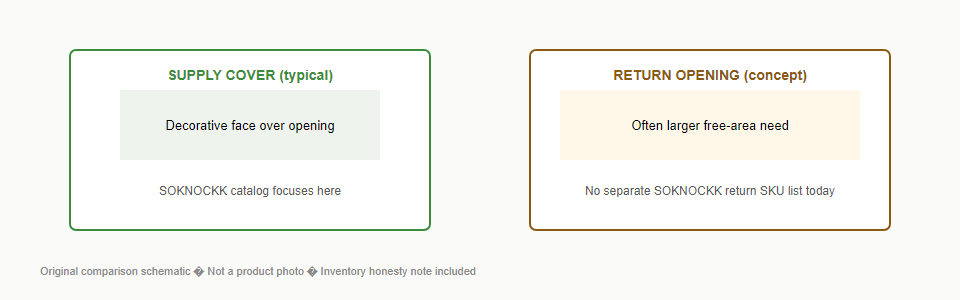
3. Supply Vent vs Return Vent: Side-by-Side Comparison
Use the table as a field guide, not as a universal building code. Homes differ. When unsure, prioritize airflow direction and measurement over assumptions from appearance alone.
| Topic | Supply opening | Return opening |
|---|---|---|
| Air direction (system on) | Typically pushes air into the room | Typically pulls air from the room |
| System role | Delivers conditioned air | Returns room air toward equipment |
| Typical location pattern | Often room ceilings / higher walls | Often larger or more central locations |
| Relative size pattern | May be smaller room-by-room openings | May be larger to support free area — varies |
| Damper / register behavior | Some supply registers include dampers; decorative covers vary | Return faces are often more open; construction varies |
| Filter relationship | Usually not the filter location | Filter may be nearby on some systems |
| Selection consideration | Match opening size + finish; confirm airflow feel | Protect free area; do not block the path |
4. How to Tell Which One You Have
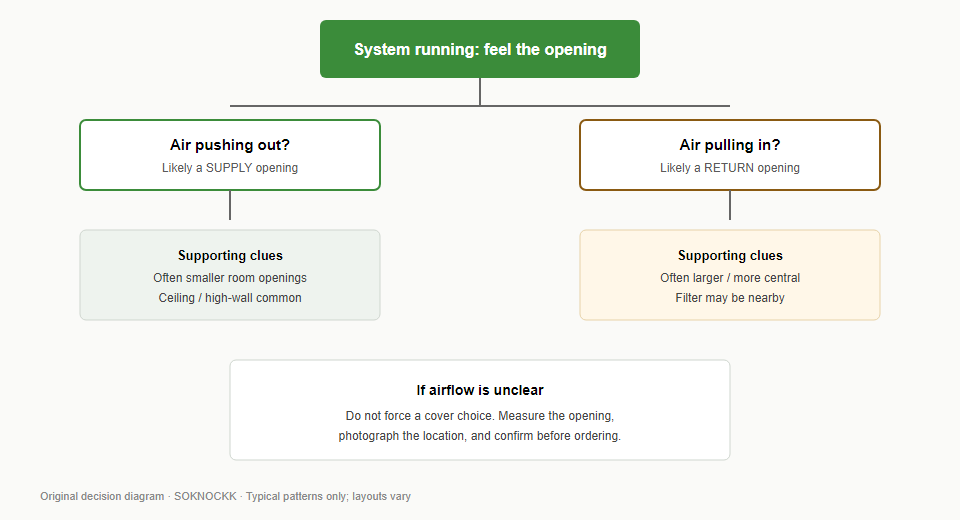
Start with a safe observation while the system is running. Do not insert fingers into moving dampers or fans. A simple sequence:
Feel airflow direction
Outward push suggests supply. Inward pull suggests return.
Note location and relative size
Use location as a supporting clue only. Large does not automatically mean return.
Look for filter context
A filter nearby can support a return-path hypothesis, but confirm with airflow.
If still unclear, pause ordering
Photograph the opening, measure it, and ask before forcing a cover choice.
5. Why Size Matters for Both Supply and Return
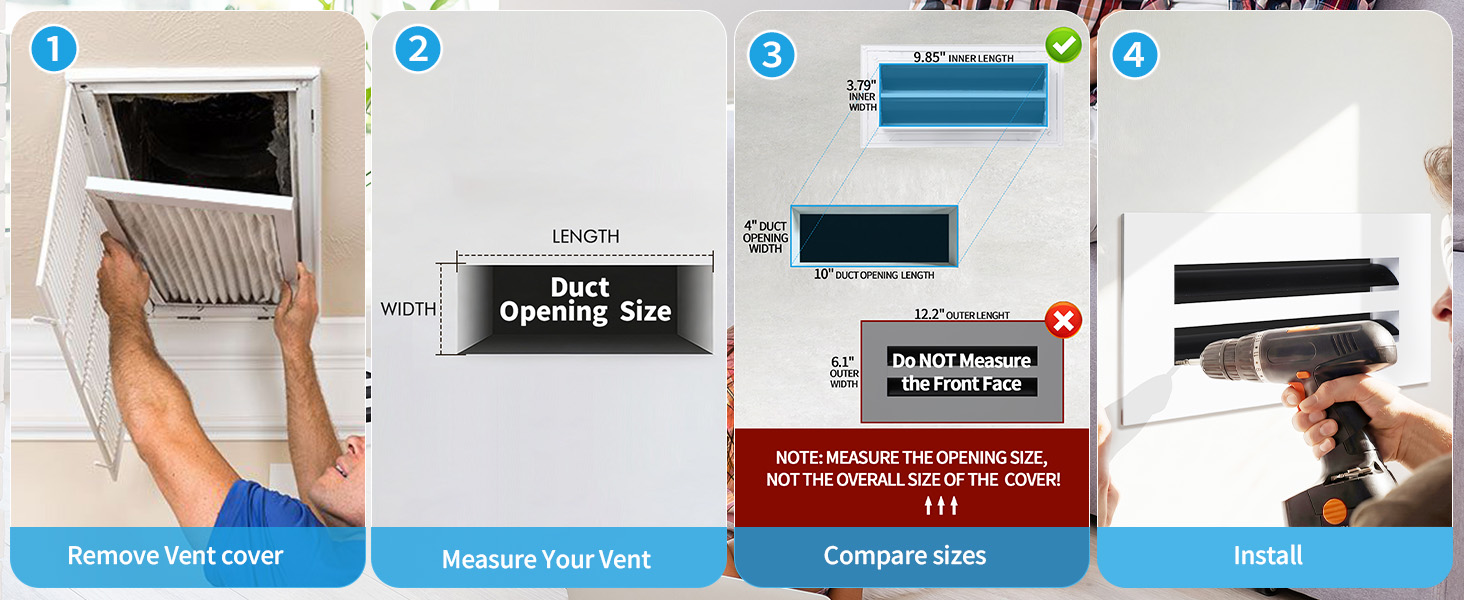
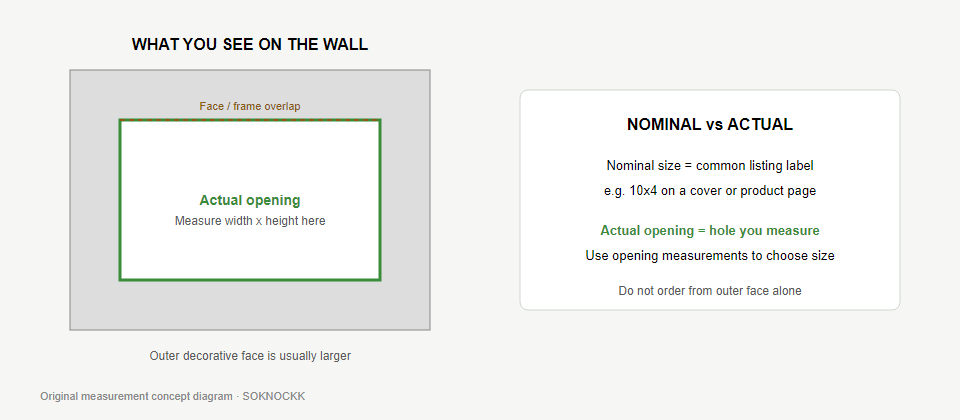
Whether the opening supplies or returns air, the cover must relate correctly to the opening. Measuring the outer decorative face alone is a common error. The useful measurement is the duct or framed opening the cover must fit.
Retail and catalog language often uses a nominal size label such as 10×4. That label is a shorthand. The actual opening can differ from the outer face dimensions. DOE duct guidance also warns that poorly sized or obstructed registers can contribute to comfort and efficiency problems — another reason not to treat cover choice as cosmetics only.
Continue with:
6. Can You Use a Supply Cover on a Return Opening?
Sometimes homeowners ask whether any cover that fits the opening is fine on a return. The honest answer is nuanced:
- Fit is not the only issue. A cover can fit the rough opening and still restrict free area if the face is too closed for that path.
- Blade / damper construction matters. Some supply registers are designed to throw air directionally. A return path generally needs an open route back to the system.
- System requirements vary. Multi-return homes, central returns, transfer grilles, and undercut doors create different pressure behaviors. This guide cannot certify a single cover style for every return.
If the opening is a critical return path, the face looks unusually restrictive, or you are unsure, get local HVAC guidance before permanently changing free area. SOKNOCKK provides catalog sizing and product detail for Confirmed decorative covers — not site-specific airflow calculations.
If you are replacing a decorative face on an opening you have identified and measured, compare catalog sizes on Vent Covers and use the measurement guides above. Do not invent a “return SKU” that is not in the public catalog.
7. What SOKNOCKK Products Are Designed For
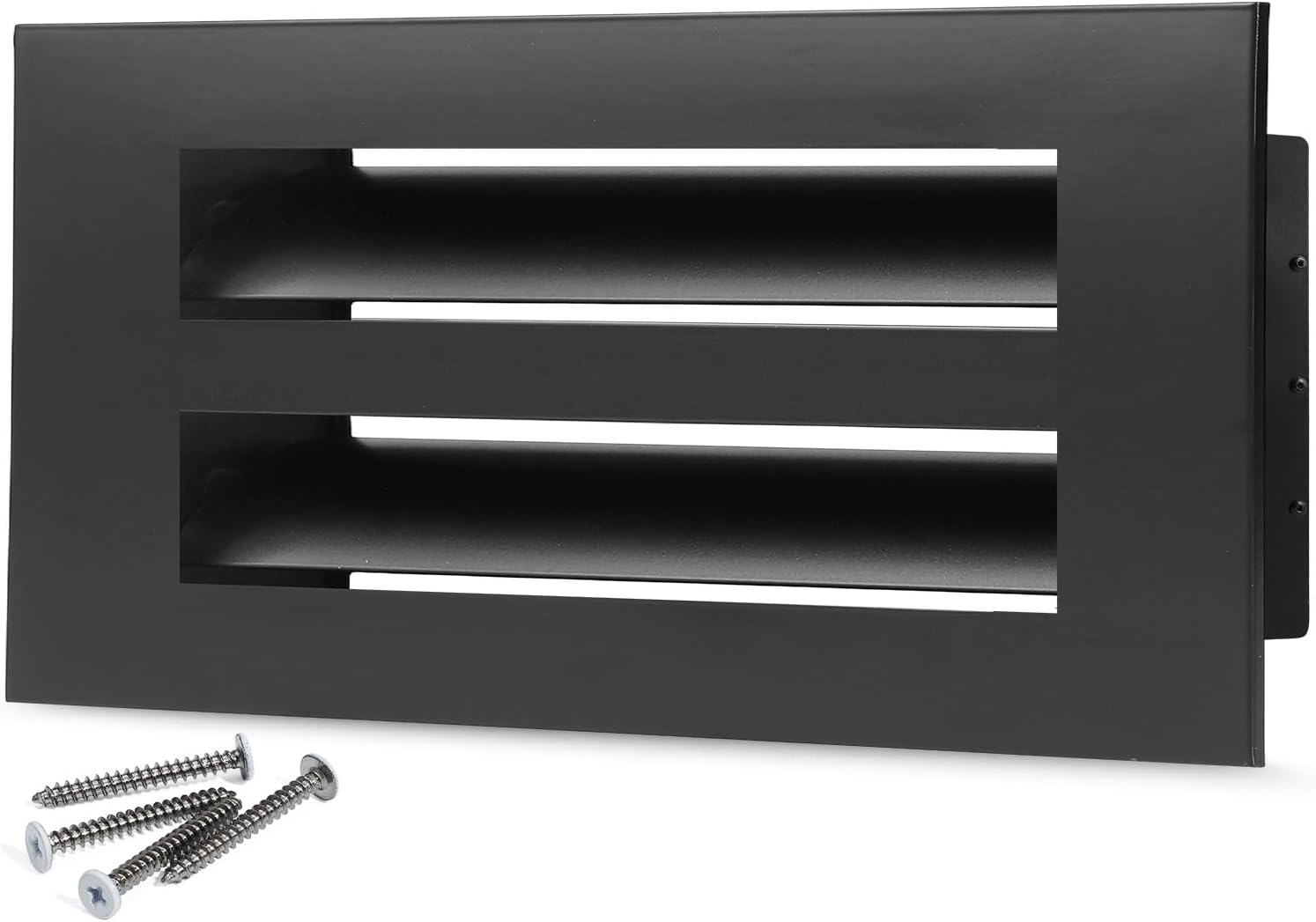
Verified public inventory (Confirmed) is organized as decorative modern AC vent covers / linear-style faces by opening size in White or Black. There are 76 Confirmed Size+Color combinations publicly discoverable. Pending combinations are not used as shopping recommendations in this guide.
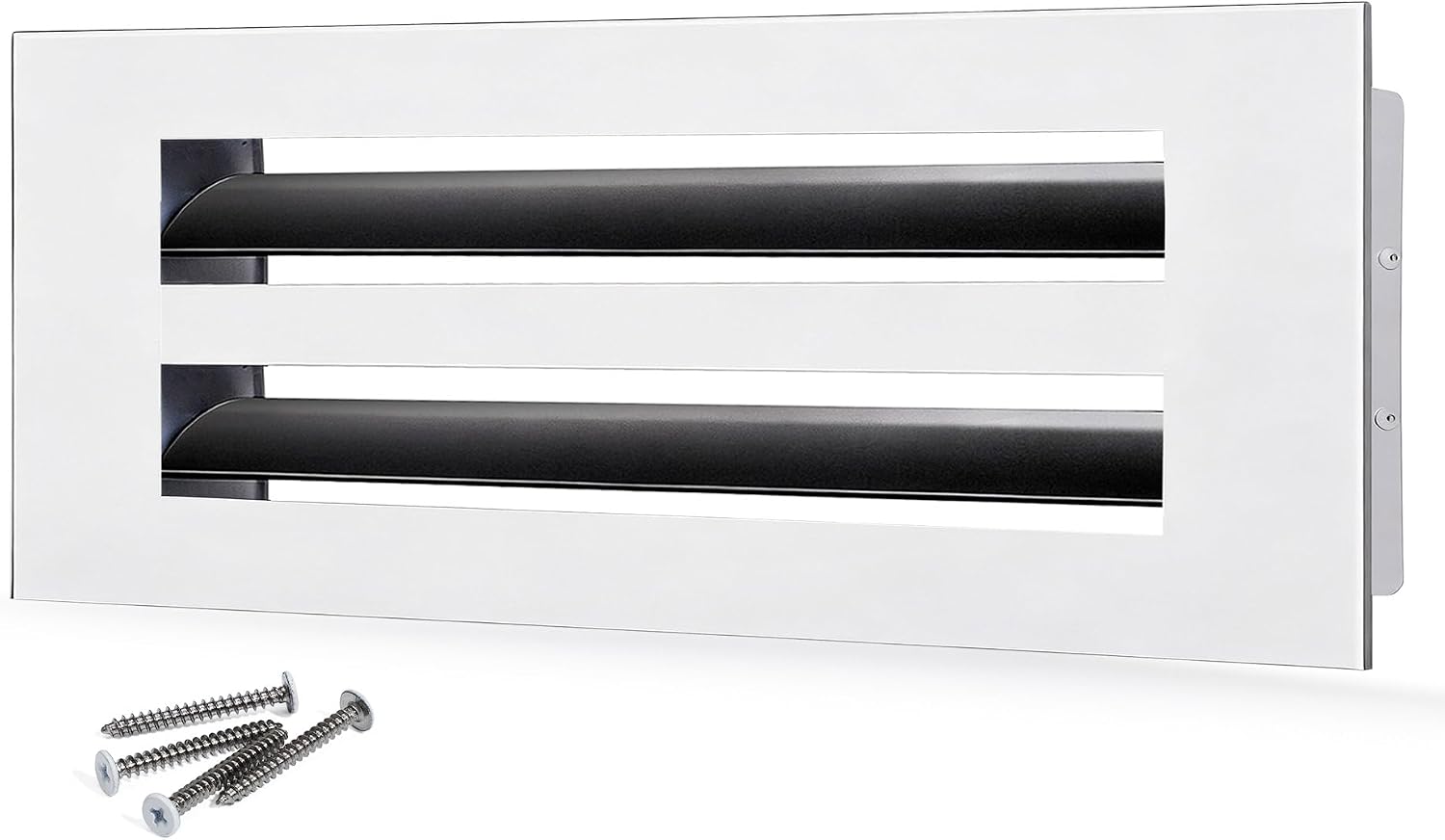
No fabricated return-grille inventory, no invented certifications, no energy-savings percentages, no shipping/price promises in this article.
8. Common Mistakes
| Mistake | Why it hurts | Better approach |
|---|---|---|
| Measuring outer face only | Orders the wrong catalog size | Measure the opening; see How-to-Measure assets |
| Assuming every large grille is a return | Misidentifies the path | Confirm airflow direction |
| Blocking a return path | Can impair circulation/comfort | Preserve free area; ask if unsure |
| Choosing finish before fit | Looks right, installs wrong | Size first, then White/Black |
| Confusing register / grille / diffuser labels | Shopper mismatch | Focus on opening job + measured size |
9. Selection Checklist
10. FAQ
Is a return always larger than a supply?
No. Many returns are larger, but layout varies. Use airflow direction as the primary check.
Do SOKNOCKK covers include dampers?
Product construction varies by listing. Check the specific Confirmed product page and images for the Size+Color you need rather than assuming every face includes an operable damper.
Can I paint a cover instead of replacing it?
Some homeowners do, but finish adhesion and airflow obstruction from thick coatings vary. This guide focuses on identifying the opening and replacing with a correctly sized cover.
Where should I go next after identifying a supply opening?
Measure, then browse Vent Covers. Use the How to Measure article if you have not measured yet.
What is a supply vent?
A supply vent is the room opening where the duct system delivers heated or cooled air into the space.
If you need a one-line check: with the fan running, supply air is usually felt pushing out of the opening.
For characteristics, placement notes, and SOKNOCKK catalog limits, use section 1 above — this FAQ does not replace that section.
After you confirm a supply opening, measure the clear opening before shopping a cover size.
What is a return air vent?
A return opening pulls room air back toward the air handler.
You typically feel inward pull. Free area still matters — do not treat every decorative face as interchangeable on a return path.
Details: section 2.
11. Sources / Technical References
General HVAC explanations in this guide are grounded in public educational sources. Product claims are limited to verified SOKNOCKK catalog facts.
- U.S. Department of Energy, Energy Saver: Tips on Saving Money and Energy in Your Home (ducts / register discussion). PDF
- DOE Building Science Education, HVAC Ducted Returns. bsesc.energy.gov
- DOE Building Science Education, HVAC Sealed and Insulated Metal Ducts. bsesc.energy.gov
- Building America Best Practices Series Vol. 14, Energy Renovations – HVAC (supply/return overview for homeowners). PDF
- SOKNOCKK Confirmed catalog / How-to-Measure assets / category landings (site evidence, 2026-09-30).