ROOM-SUITABILITY BUYER GUIDE
Aluminum Linear Vent Covers in Bathrooms and Laundry Rooms
Powder-coated aluminum linear vent covers can suit many bathroom and laundry-room HVAC openings when the room conditions, opening role, and installation details are checked carefully. The finish statement helps describe the product, but it does not create a waterproof, wet-location, corrosion-life, or chemical-resistance rating.
Quick answer
Yes, a powder-coated aluminum linear vent cover may be a practical choice for a bathroom or laundry room when it is installed as a normal supply or return cover on a wall or ceiling, kept out of direct spray, and matched to the measured opening. Treat the listing language as material, finish, and application information: Aluminum Alloy, powder-coated finish, and ceiling/wall/floor or supply/return labels. Those labels do not prove an IP rating, waterproof construction, guaranteed corrosion lifetime, floor-load capacity, or approval for a shower enclosure. Use ventilation to control room humidity, keep the face reasonably dry, and follow the exact Size+Color listing and fastening instructions for the opening.
Start with the evidence you actually have
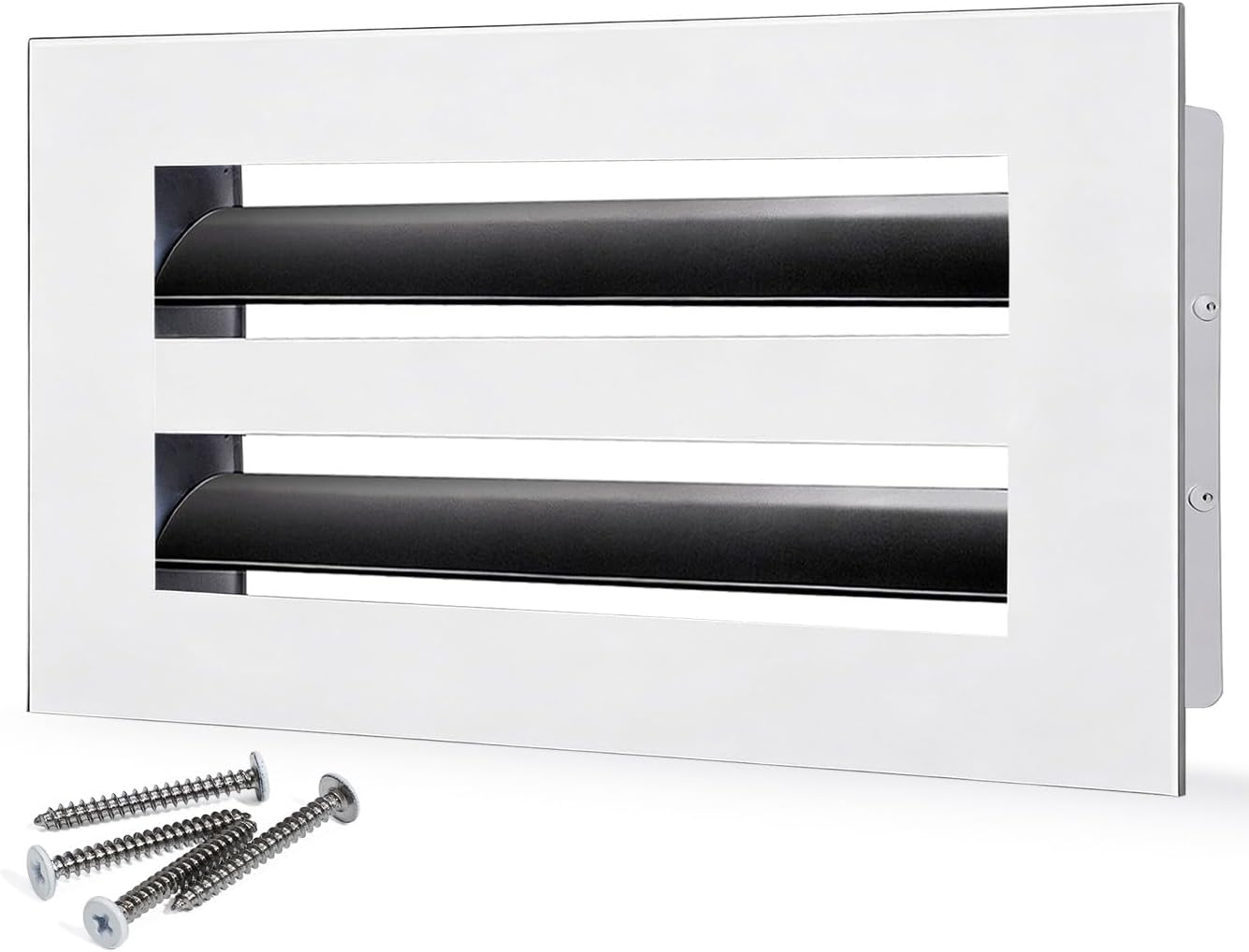
The checked product family is described as Aluminum Alloy with a powder-coated finish. The catalog also identifies applications such as ceiling, wall, or floor and supply or return. These are useful selection clues, but they are not the same as a moisture certification. A bathroom buyer should read “powder-coated” as a finish description, not as a promise that the cover is waterproof or approved for a wet zone.
Likewise, an application label tells you where the model family may be used as an opening cover. It does not establish a floor-load rating, a permitted location inside a shower, a corrosion warranty measured in years, or resistance to every cleaner. If a local code official, HVAC contractor, or manufacturer requires a specific wet-location approval, ask for that evidence for the exact model and installation condition.
Bathroom use: control exposure, not just appearance
Bathrooms vary. A ceiling supply opening in a half bath has a different exposure than a cover directly above a tub. Place the vent where the duct design and room plan call for it, while avoiding direct shower spray, standing water, and locations where towels or fixtures will repeatedly strike the face. A cover can be visually suitable for a spa-style room and still be the wrong choice for a continuously wet enclosure.
Use the room exhaust fan and normal ventilation to move humid air out of the room. Do not treat the vent cover as the moisture-control system. After showers, a cover that receives condensation or droplets should be allowed to dry. Persistent dampness, leaks, or water entering the boot should be corrected at the source before a decorative replacement is installed.
For a supply opening, confirm that the adjustable airfoil blades can direct air as intended. The product language describes direction and volume adjustment; it does not describe an airtight shutoff. For a return opening, keep the face clear so the return path is not blocked by shelving, baskets, or bath accessories. Read the supply-versus-return explanation before ordering if the opening role is uncertain: supply vent vs. return vent.
Laundry-room use: watch lint, drips, and access
Laundry rooms are often humid but usually have more predictable splash exposure than a shower area. A wall or ceiling cover can work when the opening is correctly connected and the face is not placed where a washer hose, utility sink, or condensate line can drip onto it. Keep lint, detergent dust, and storage items from accumulating across the slots.
Do not use the vent face as a shelf or step. Even when a listing includes floor among its application labels, that wording is not a published load chart. A floor installation deserves separate confirmation of the opening construction, traffic, and load requirements. For ordinary wall or ceiling replacement, the key questions are the measured opening, face coverage, duct or boot alignment, and fastening method.
Powder-coated finish: sensible care and clear limits
Powder coating can provide a uniform decorative surface on the aluminum alloy body. In a bathroom or laundry room, wipe away visible moisture and lint with a soft, damp cloth, then dry the face. Use the cleaning guidance supplied for the product family and test any unfamiliar cleaner on an inconspicuous area first. Avoid abrasive pads, scraping tools, and aggressive solvents that could dull or damage the coating.
Do not infer chemical resistance from the phrase “powder-coated.” The available evidence does not establish performance against bleach, descaler, disinfectant, detergent concentrate, salt air, or other specific chemicals. It also does not promise a corrosion-free service life. If the room has unusual exposure, request written compatibility guidance for the exact finish and chemical routine.
Installation checks for humid rooms
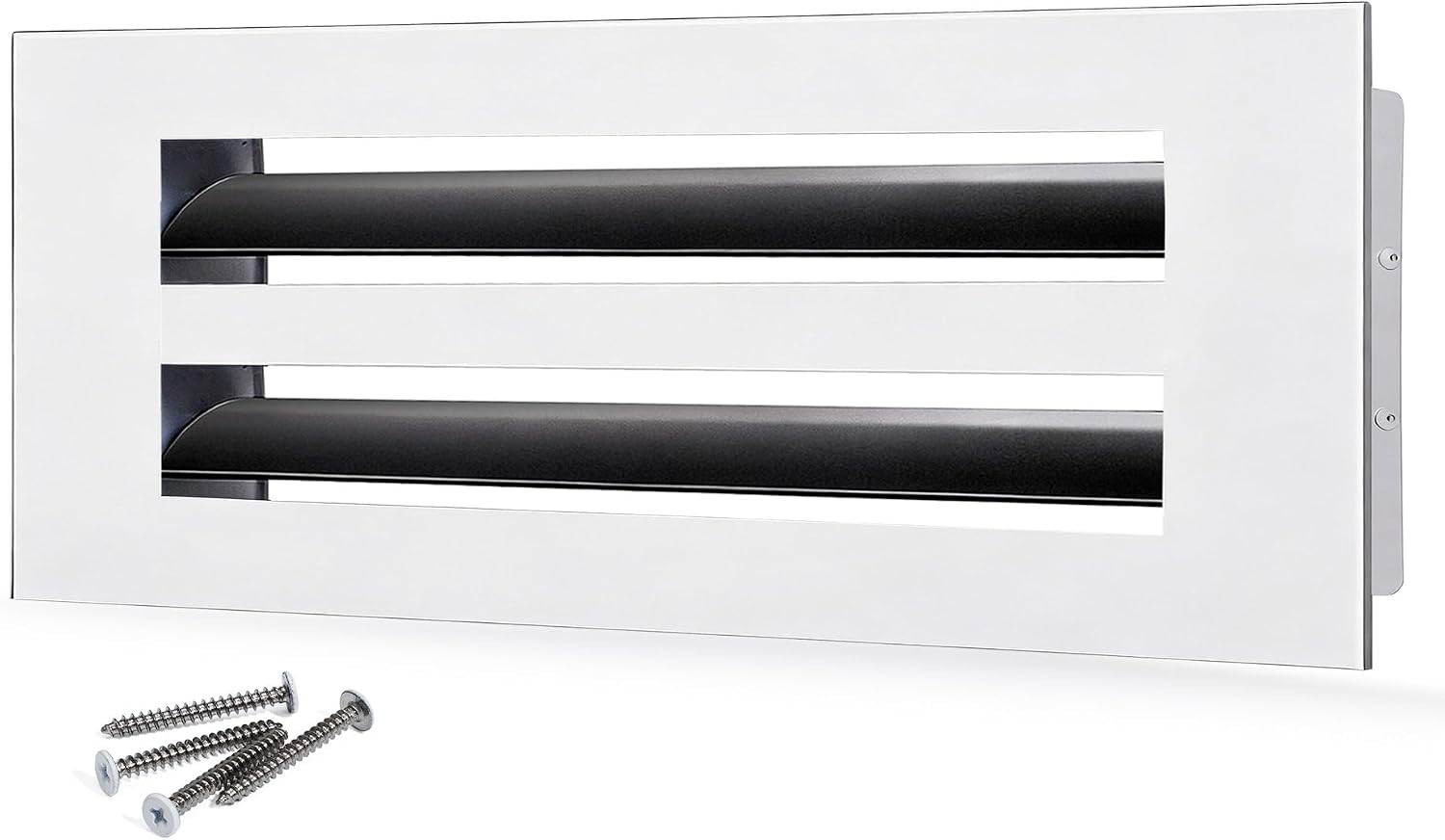
Measure the existing opening before selecting a Size, then select the Color. A nominal label such as 10×4 is not a substitute for the actual opening and face dimensions. The checked 10×4 White listing gives example neck dimensions of approximately 9.85 inches by 3.79 inches and face dimensions of approximately 12.2 inches by 6.1 inches. Recheck the exact Size+Color listing because other sizes may differ.
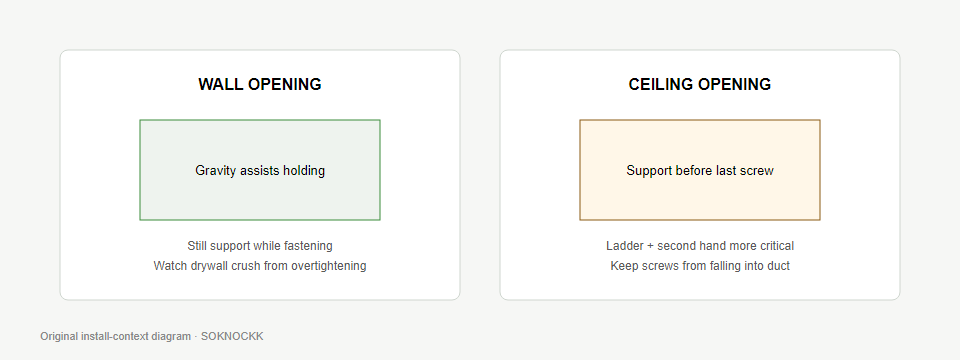
The product family uses hidden or concealed screw mounting, with mounting screws described in the listing language. It is not a magnet or clip installation. Dry-fit the face, verify that the neck enters the boot without forcing it, and check that the face sits flat before fastening. In a humid room, a flat fit helps avoid ledges where water or lint can collect, but it does not seal the opening against leaks.
Do not caulk over moving blades or create a permanent seal that prevents future service. If the existing opening is damaged, leaking, or badly out of square, repair that condition first. Use the installation basics and vent-opening measurement guide for the separate measurement and fastening steps.
Bathroom and laundry-room decision table
| Question | Bathroom | Laundry room | What to verify |
|---|---|---|---|
| Typical exposure | Humidity, condensation, possible splash | Humidity, lint, occasional drips | Keep out of direct spray and active leaks |
| Good placement | Wall or ceiling supply/return outside shower spray | Wall or ceiling away from hoses, sinks, and storage | Confirm duct role and opening location |
| Finish meaning | Powder-coated decorative finish on aluminum alloy | Same listing description | No invented IP, waterproof, or corrosion-life claim |
| Cleaning approach | Soft cloth, mild routine, dry afterward | Remove lint and detergent dust without abrasion | Check cleaner compatibility before repeated use |
| Installation risk | Condensation collecting on a poor fit | Drips, lint buildup, blocked return path | Measure, dry-fit, fasten with listed screws |
Choose a product path without overclaiming
For a confirmed example, compare the Modern AC Vent Cover listing and select the measured Size before choosing White or Black. The confirmed 10×4 White and 16×4 White photos show two real Size+Color combinations; they do not establish dimensions for every other option. If you are replacing an existing face, review replace vent cover and check whether the screw locations and opening geometry are compatible.
Buyer checklist for a humid-room order
- Identify whether the opening is supply or return.
- Measure the opening and compare it with the exact Size listing.
- Select Size first, then White or Black Color.
- Confirm wall or ceiling placement and keep the face away from direct spray, leaks, and impact.
- Read “Aluminum Alloy” and “powder-coated finish” as material and finish statements.
- Do not assume waterproofing, an IP rating, chemical certification, corrosion years, floor-load capacity, or airtight shutoff.
- Plan hidden-screw installation and dry-fit before fastening.
- Keep blades, slots, and return openings clear of storage and lint.
- Use gentle cleaning practices and dry persistent condensation.
- Ask the seller or installer for written confirmation if your location is a shower enclosure, exterior exposure, commercial wash area, or unusual chemical environment.
FAQ
Does powder coating make a linear vent cover bathroom-safe?
It supports a finish description, not a bathroom certification. Use the cover in a sensible wall or ceiling location away from direct spray and verify any special wet-location requirement separately.
Can I install the same model in a bathroom and a laundry room?
Potentially, if each opening is measured and the application, exposure, and installation conditions are suitable. Choose the correct Size for each opening; do not transfer dimensions from one photographed SKU to another.
Can I use a bathroom cover on the floor?
The catalog may list floor among applications, but that is not a load rating. Confirm floor construction and load requirements before treating any cover as a walkable or traffic-bearing component.
Are these covers waterproof or corrosion-proof?
No such claim should be inferred from the available listing facts. The evidence identifies aluminum alloy and a powder-coated finish, without a published IP rating, corrosion-life promise, or chemical-resistance chart.
What if the existing opening is damp?
Find and correct the leak, condensation source, or ventilation problem first. A new face can improve appearance while leaving the underlying moisture problem unresolved.
For additional planning, see the White versus Black room-finish guide and the aluminum finish cleaning guide.